
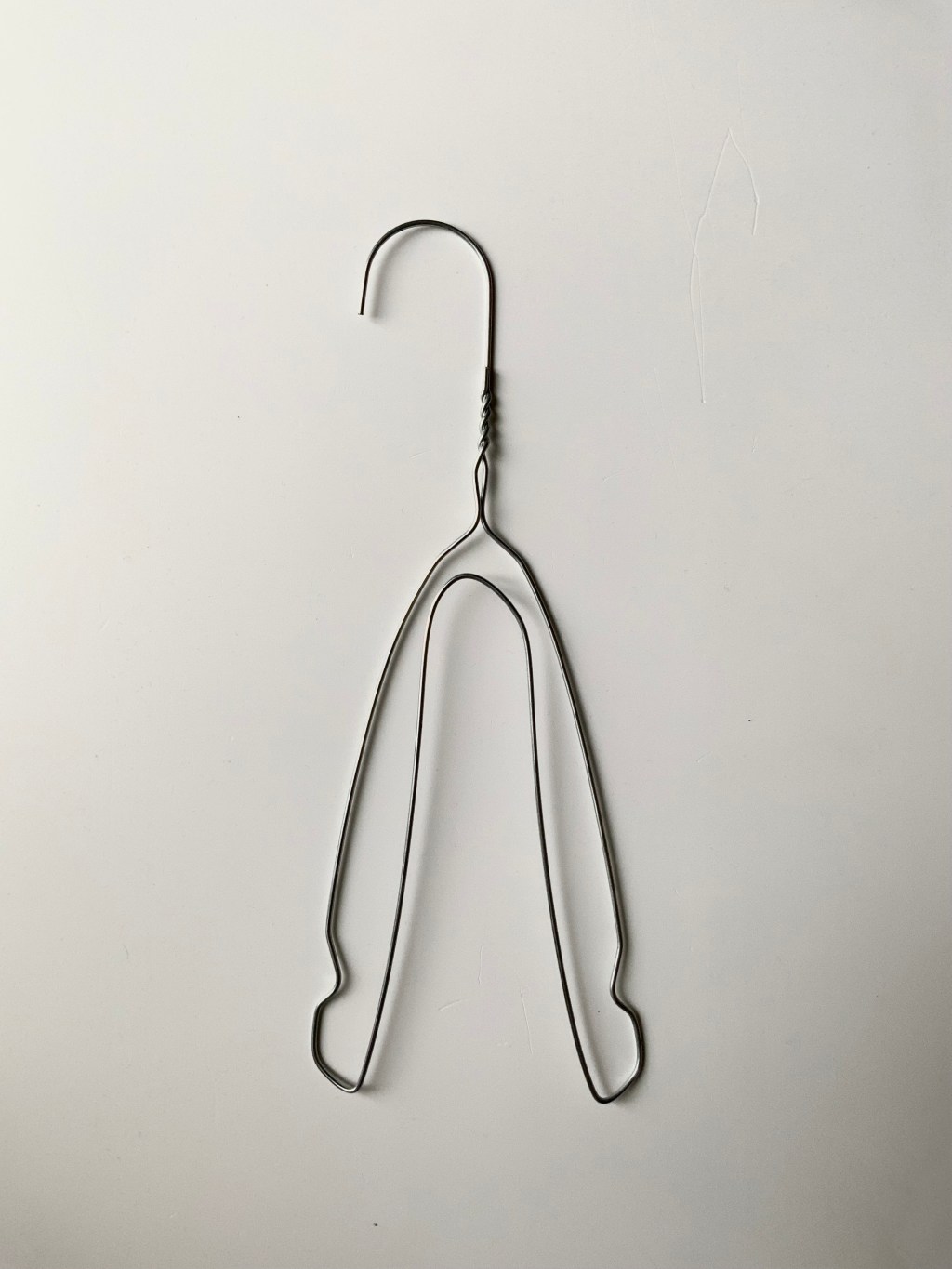
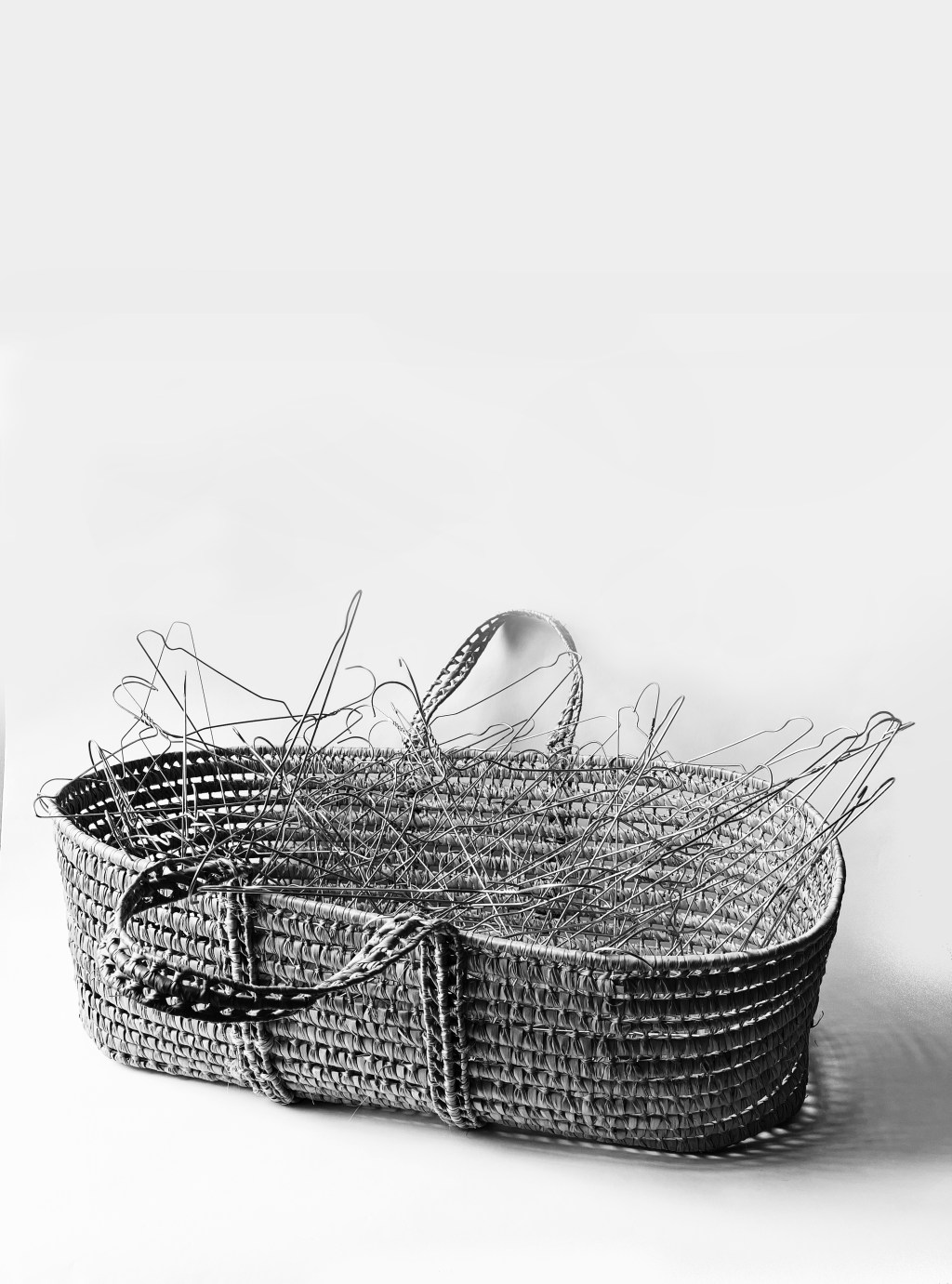
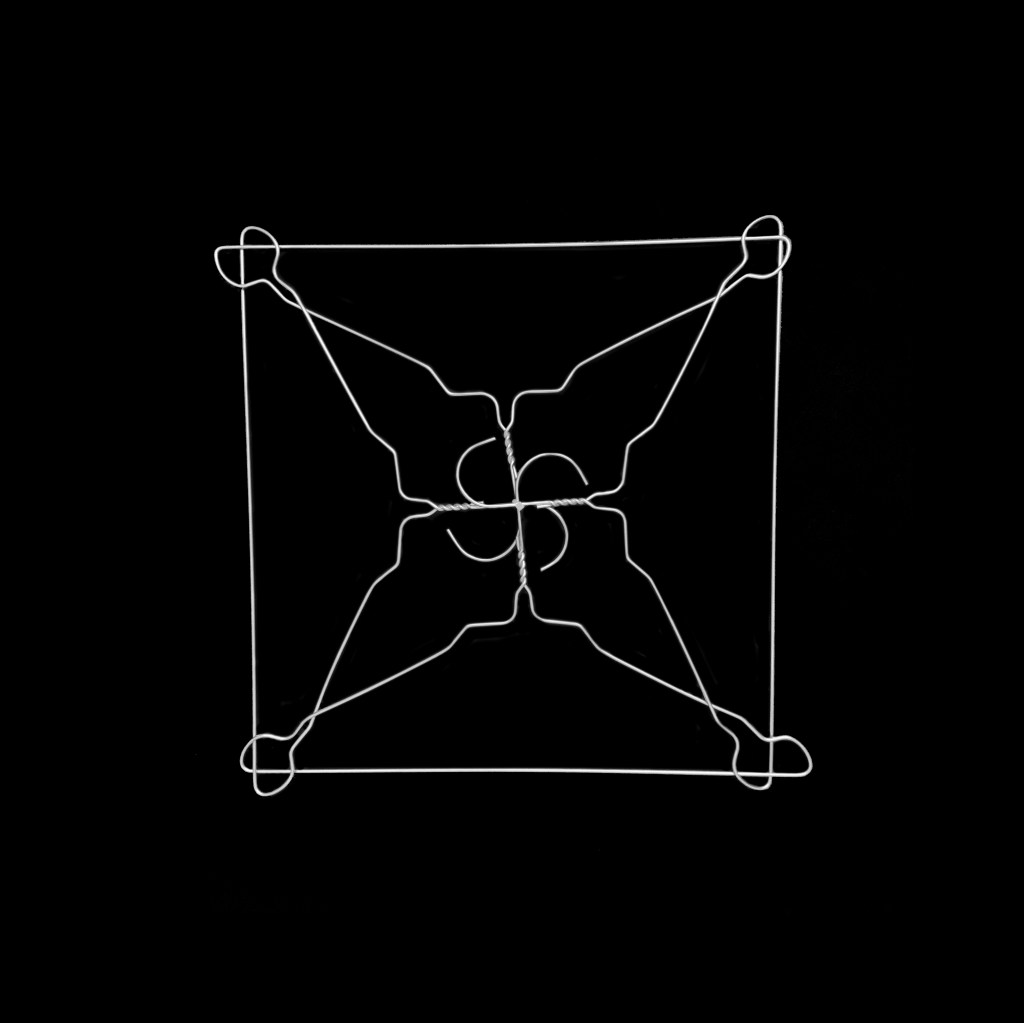
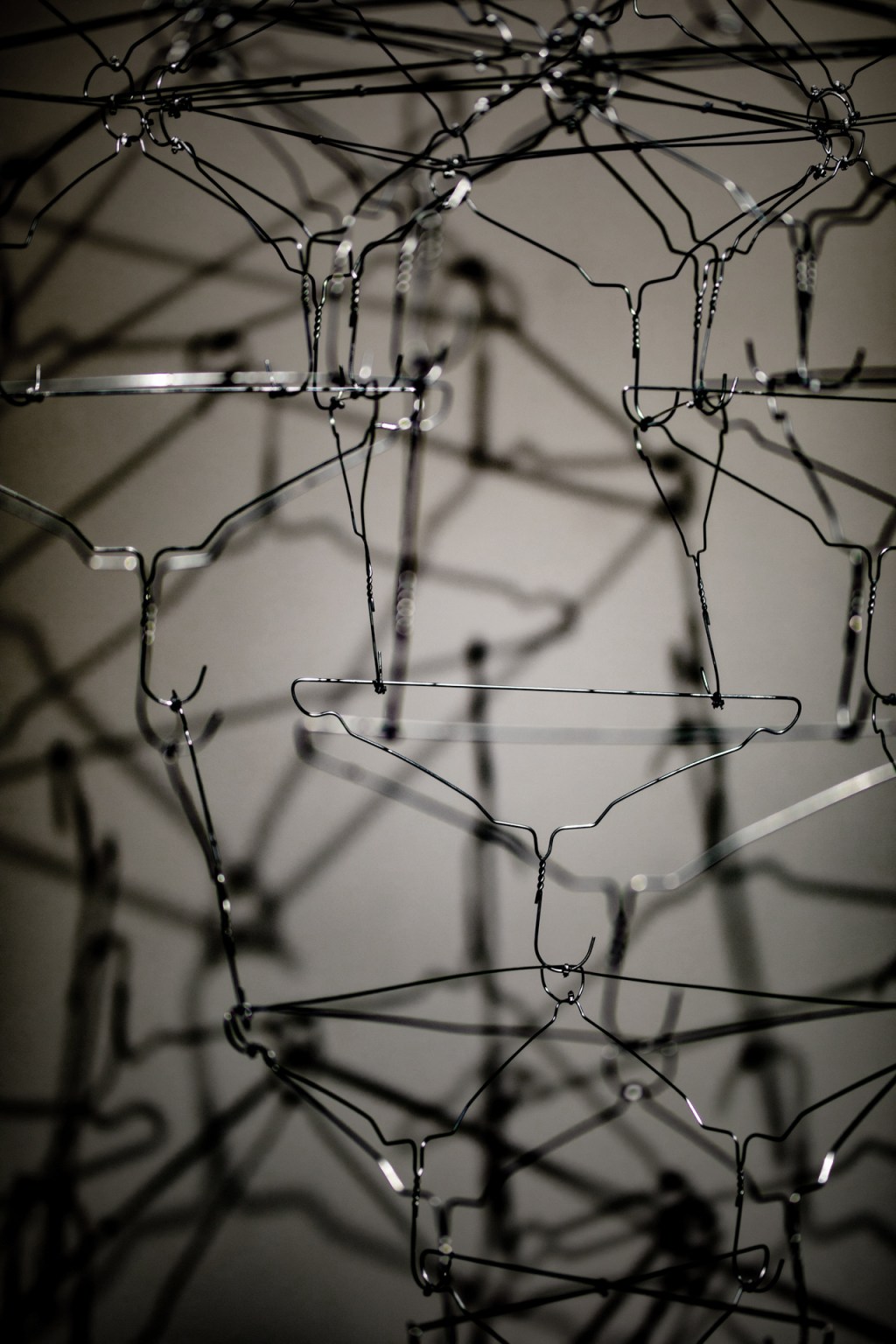
wishbone | 2025, bent dry-clen wire hangers
en
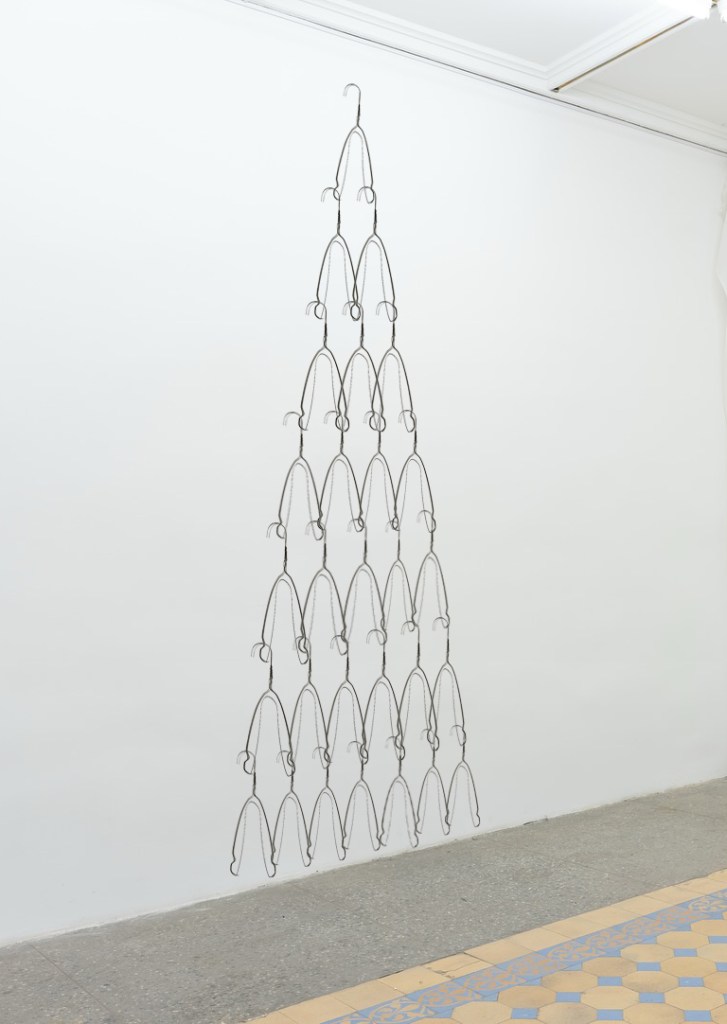
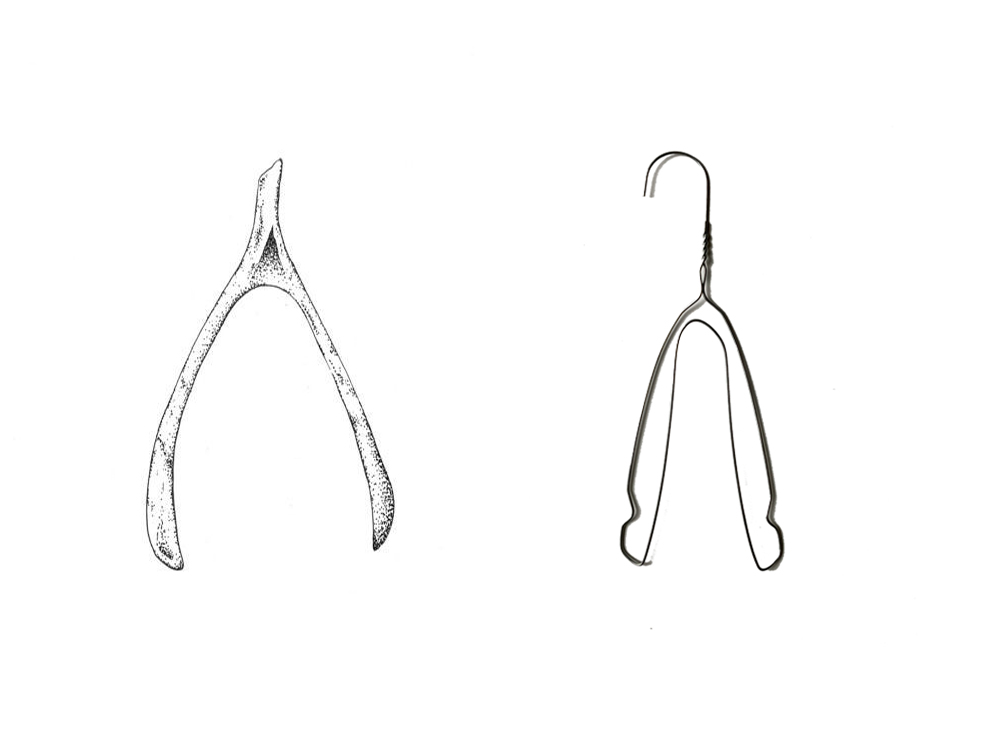
According to the Book of Genesis in the Old Testament, woman was created from Adam’s rib. Extending the skeletal narrative, the deformed hanger evokes the form of a bird’s sternum — a furcula, or “wishbone” — regarded by the ancient Etruscans as a magical bone capable of fulfilling desires. Once bent into this delicate anatomical shape, the hanger acquires a ritual dimension, inviting reflection on the fragility of our desires and on fashion itself as a system that produces, packages, and mass-replicates those desires. The hanger, in this context, becomes both a metaphor for shoulders — a symbol of inner and physical resilience — and a skeletal structure that whispers of the proverbial “skeletons in the closet”: hidden secrets, unspoken traumas, repressed identities, unsatisfied longings…Simultaneously, this chain of bent hangers visualises how the aesthetic standards of fashion exert pressure on individuality — compressing the self, framing it, restraining it within the bounds of the acceptable.
lt
furcula
Senojo testamento Pradžios knygoje teigiama, jog Dievas sukūrė moterį iš Adomo šonkaulio. Instaliacijoje pakaba asocijuojama su žmogiškojo skeleto pečių simuliacija. Pečiai – tvirtybės, ryžto, valios ir kovos išraiška. Tęsiant skeletų naratyvą ir deformuojant pakabą sukuriama aliuzija į paukščio krūtinkaulį (lot. furcula, vadinamąjį „norų kaulą“), kurį senovės Etruskai laikė magišku, norus (iš)pildančiu kaulu. taip utilitarus objektas įgauna ritualinę dimensiją, skatinančią apmąstyti mūsų troškimų trapumą ir madą, kaip tuos troškimus “gaminančią” ir tiražuojančią sistemą.
Nugalintos Pakabos šioje instaliacijoje yra tarsi spintoje paslėpti skeletai, slepiantys mūsų neišreikštas asmenines tapatybes, neišsakytus troškimus… Tuo pačiu šis pakabų vėrinys atsiskleidžia mados estetinių standartų poveikį individualybei, kuomet asmeniškumas tampa suspaustas, įrėmintas, pažabotas, sutvarkytas…
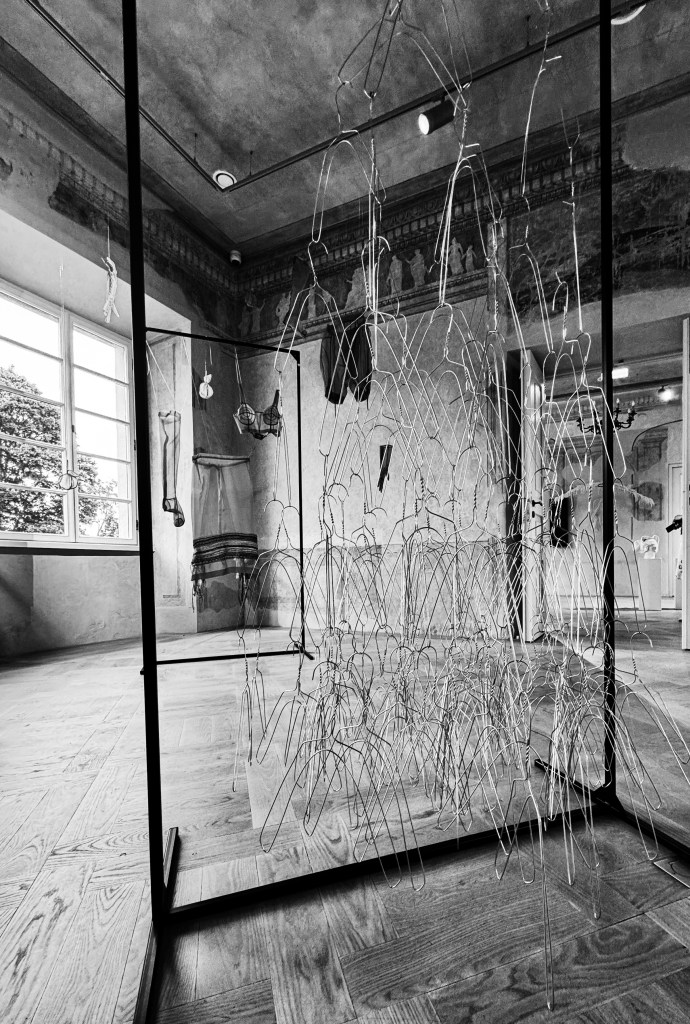
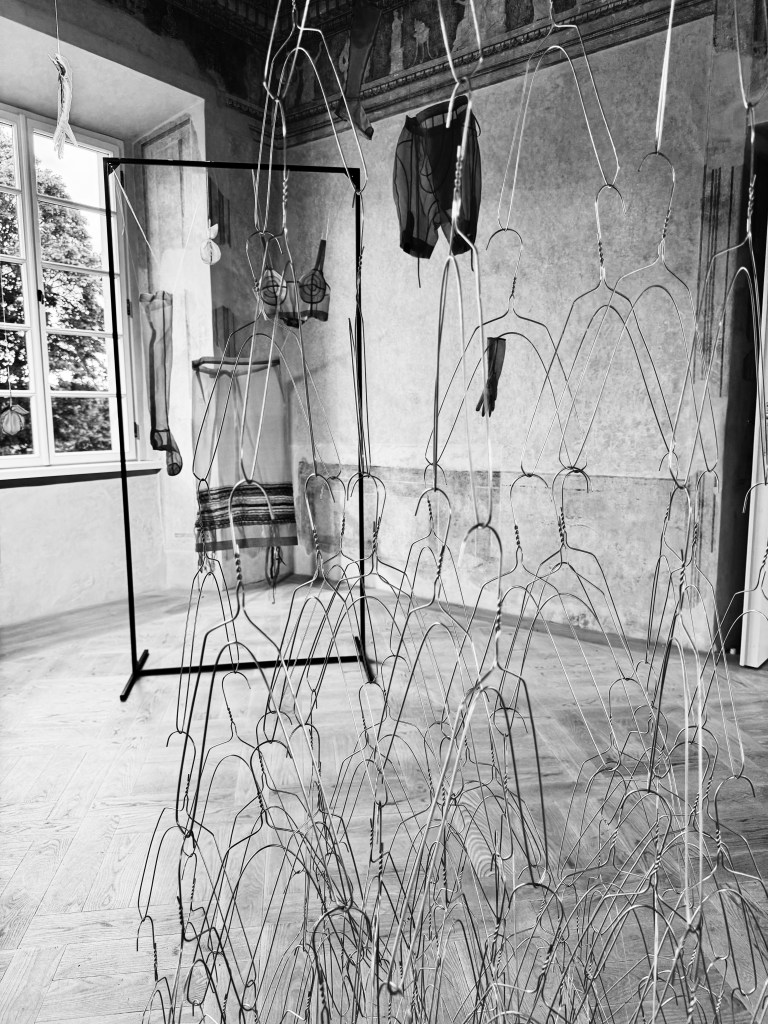
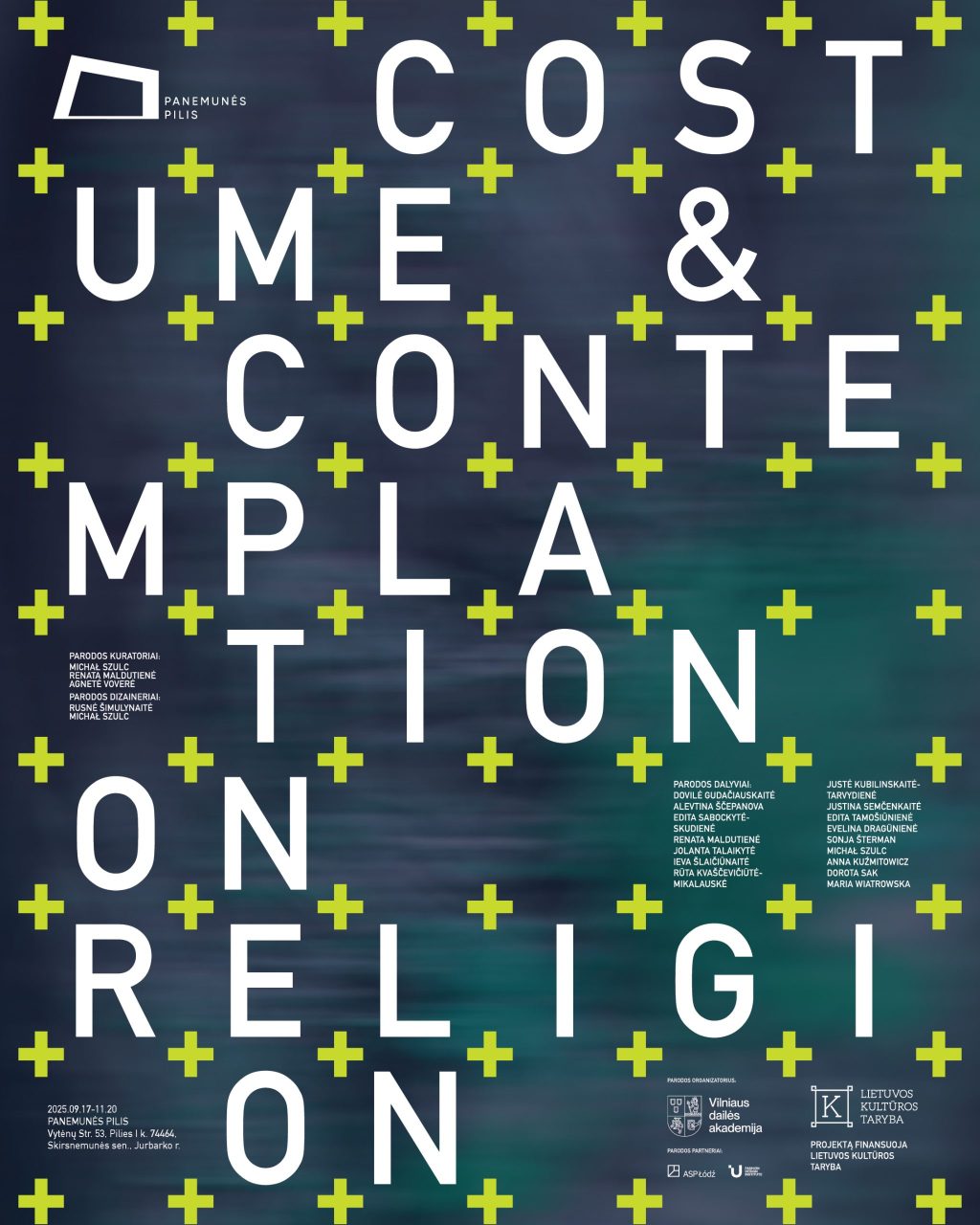
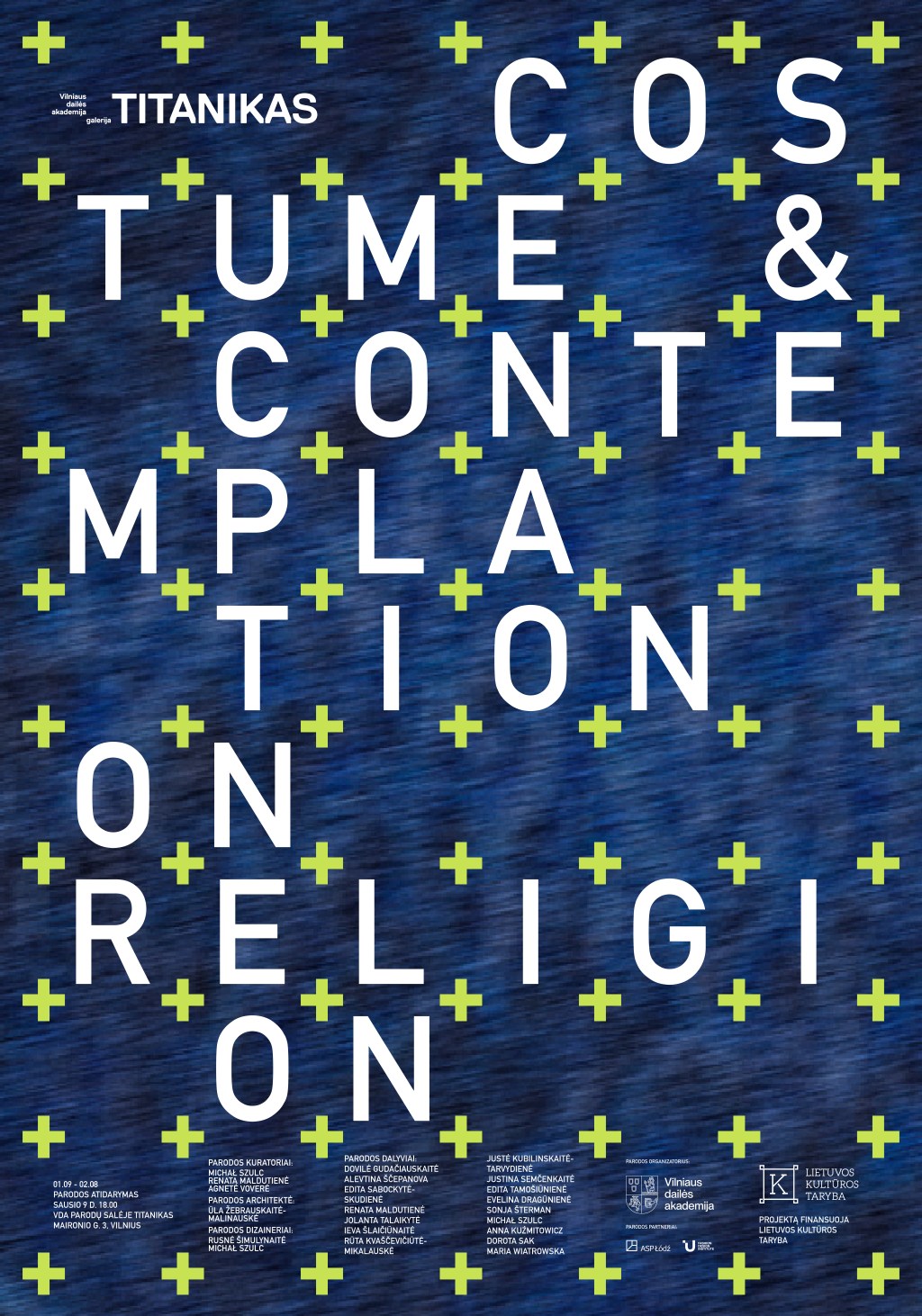
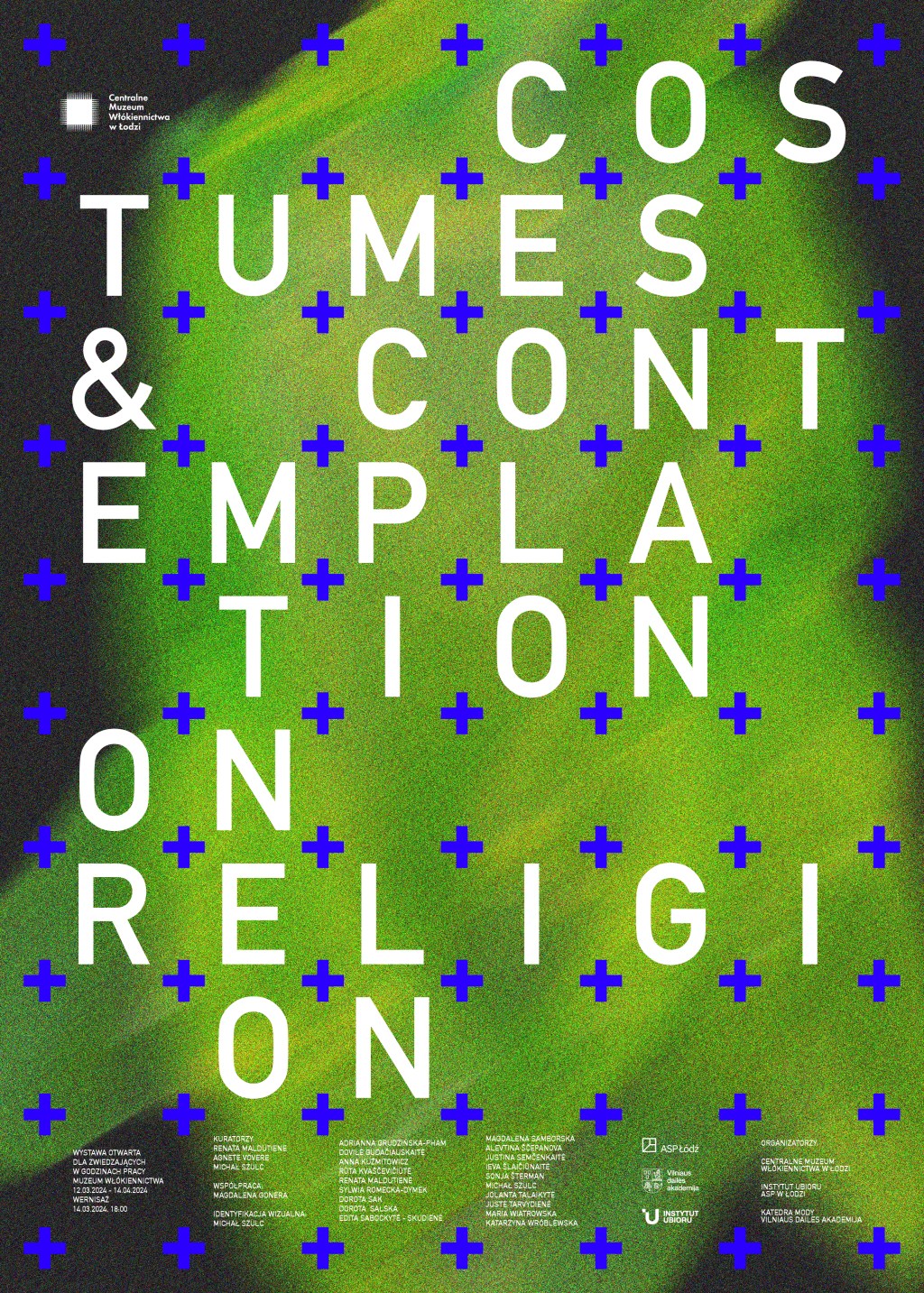
Exposition at panemunės castle, international exhibition “Costume & contemplation on religion”, 2025
 FASHION EROSION