
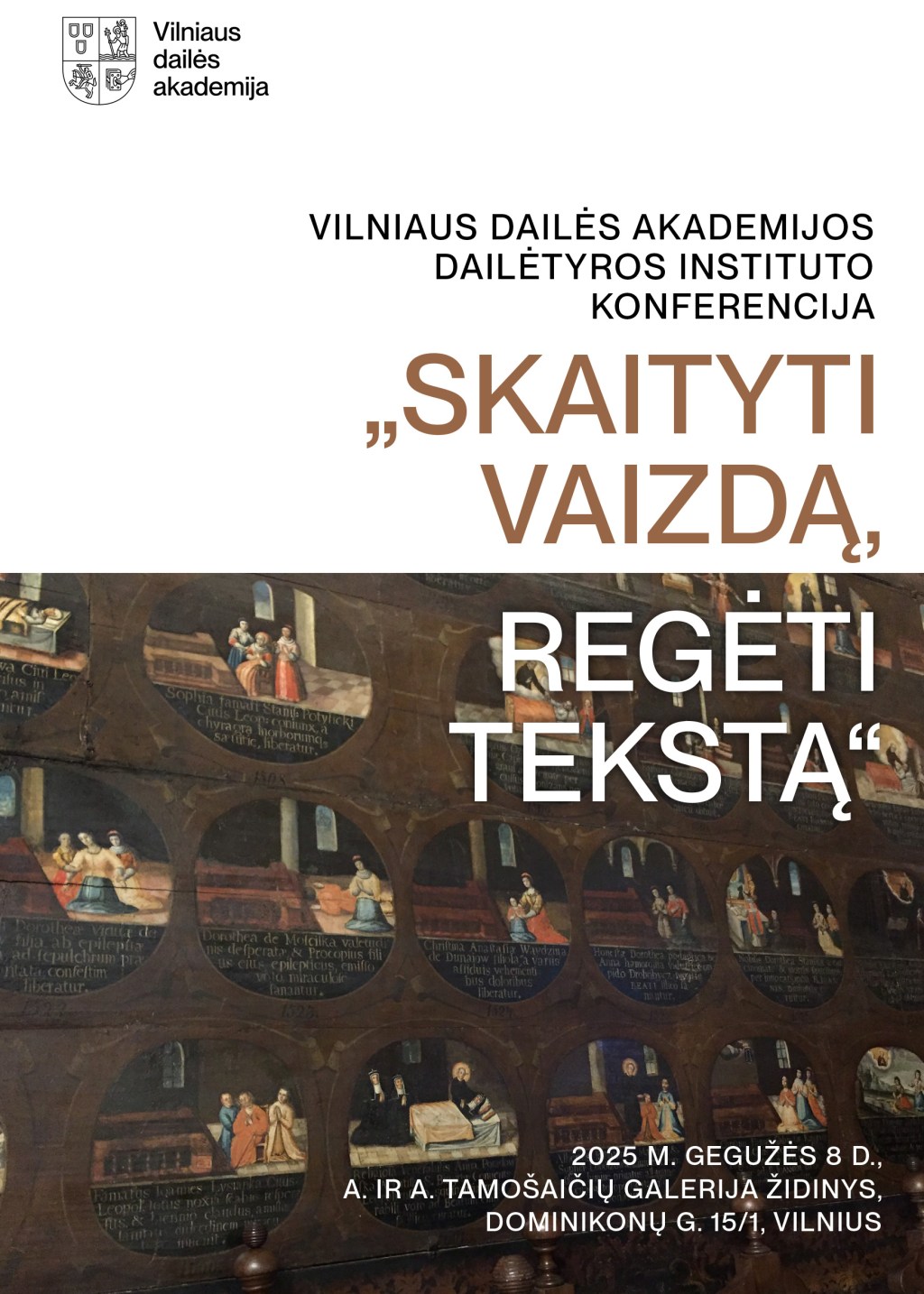
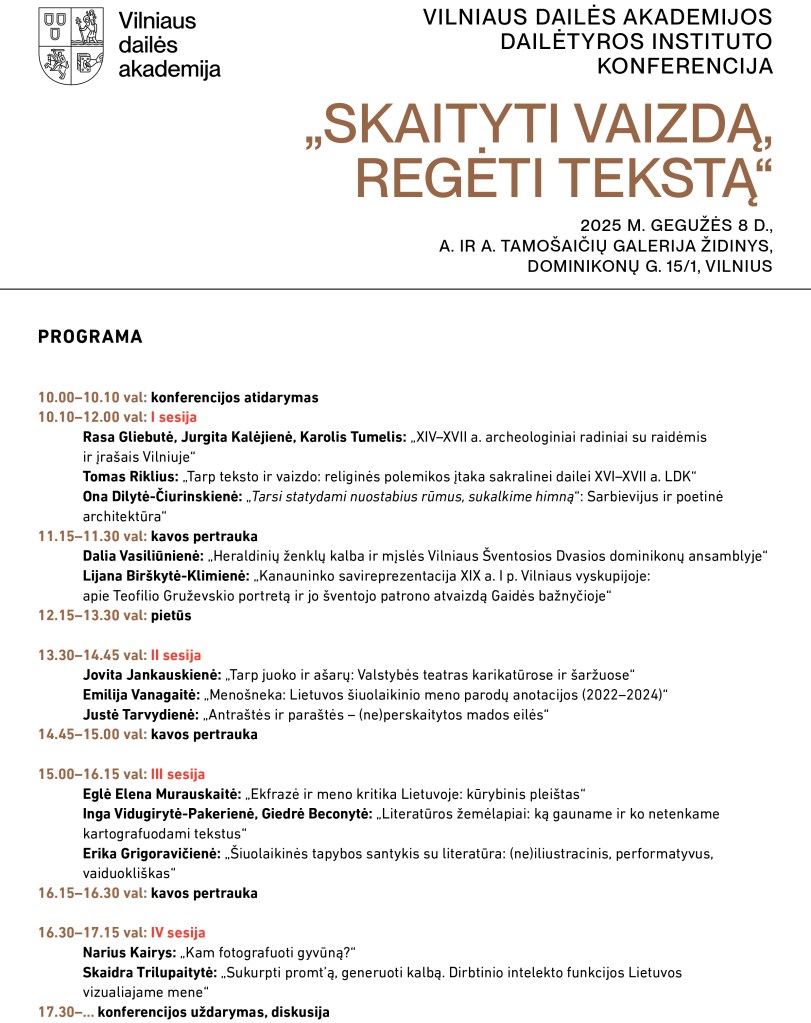
Skaityti vaizdą, regėti tekstą | read image, see text – Conference of the Institute of Art Studies of the Vilnius Academy of Arts
Vilniaus dailės akademijos
Dailėtyros instituto konferencija
2025 m. gegužės 8 d., A. ir A. Tamošaičių galerija, Domininkonų 15/1, Vilnius
(english below) Ar vaizdas gali būti skaitomas ir ar tekstas gali būti regimas? Vaizdo ir teksto santykyje susilieja pažintinė kalbos galia ir vizualinio vaizdavimo betarpiškumas. Šio santykio problematika akstina mąstytojus dar nuo Antikos laikų – Homero „Iliadoje“ aptinkame pirmąjį Vakarų literatūroje ekfrazės, t. y. meno kūrinio aprašymo, pavyzdį. Vaizdo ir teksto santykio glaudumas ir problemiškumas išryškėja, gilinantis į Renesanso ir ypač Baroko laikotarpiais suklestėjusios emblemikos žanro konceptualumą ir teksto bei vaizdo paradigmų susikirtimą. XX a. filosofijoje išryškėjo nauja vaizdo tekstualumo ir teksto vizualumo samprata. Prancūzų semiotiko Roland‘o Barthes‘o teoriniuose tekstuose suformuota moderniojo mito samprata pabrėžė ne žodinę, bet vaizdinę pasakojimo galią iškraipyti regimojo pasaulio vaizdą. W. J. T. Mitchell‘o vaizdų teorijoje žodžių ir vaizdų santykis yra dinamiškas, jie veikia kartu, kurdami prasmę, kurios nė vienas iš jų negalėtų perteikti atskirai. Jacques‘o Rancière‘o estetinėje teorijoje būtent vaizdo ir teksto santykis suprantamas kaip formuojantis mūsų pasaulio suvokimą.
Vilniaus dailės akademijos Dailėtyros instituto tarpdisciplininė mokslinė konferencija „Skaityti vaizdą, regėti tekstą“ kviečia giliau nagrinėti teksto ir vaizdo santykį.
en
Can an image be readable and can a text be visible? The relationship between image and text combines the cognitive power of language and the immediacy of visual representation. The problematics of this relationship have been stimulating thinkers since Antiquity – in Homer’s “Iliad” we find the first example of ekphrasis, i.e. the description of a work of art, in Western literature. The closeness and problematic nature of the relationship between image and text become apparent when delving into the conceptuality of the emblematic genre that flourished during the Renaissance and especially the Baroque periods, and the intersection of the paradigms of text and image. In the 20th century, a new concept of the textuality of image and the visuality of text emerged in philosophy. The concept of modern myth, formed in the theoretical texts of the French semiotician Roland Barthes, emphasized not the verbal, but the visual power of narrative to distort the image of the visible world. In W. J. T. Mitchell’s theory of images, the relationship between words and images is dynamic, they work together, creating a meaning that neither of them could convey separately. In Jacques Rancière’s aesthetic theory, it is the relationship between image and text that is understood as shaping our perception of the world.
The interdisciplinary scientific conference “Reading the image, seeing the text” of the Vilnius Academy of Arts Institute of Art Studies invites you to explore the relationship between text and image in more depth.



 FASHION EROSION